Spend enough time talking with friends and neighbors in Naperville about tacos prepared according to halal standards, and you will hear a handful of myths repeated with surprising confidence. Some of them arise from confusion about what halal means; others are artifacts of early experiences that did not reflect the best of what halal tacos can be. As someone who follows the local dining scene—from quick lunches downtown to post-game stops along Ogden Avenue—I have learned that most misconceptions unravel the moment you engage a kitchen that takes standards seriously. If you are curious and ready to taste for yourself, browsing a taqueria’s menu can be the first step toward clearing the fog.
Misconception one is that halal limits flavor. I have heard people say that keeping halal means cooking with fewer spices or cutting back on the techniques that make tacos sing. In practice, the opposite is true. Halal defines sourcing and certain preparation principles; it does not police creativity. In Naperville, halal taquerias layer citrus, chilies, herbs, and warm spices with the same enthusiasm as any great kitchen. The difference is that they do it while honoring standards that foster trust.
A related myth says halal tacos are just for those who observe halal. Many of the busiest tables I see downtown include a mix of diners—some who keep halal, others who simply want food that is bright, balanced, and carefully prepared. Halal kitchens earn loyalty by making a meal that feels considered, and good food transcends categories. Once you bite into a tortilla that has been warmed with care and filled with a clean, well-seasoned protein, the label becomes background information rather than the defining feature.
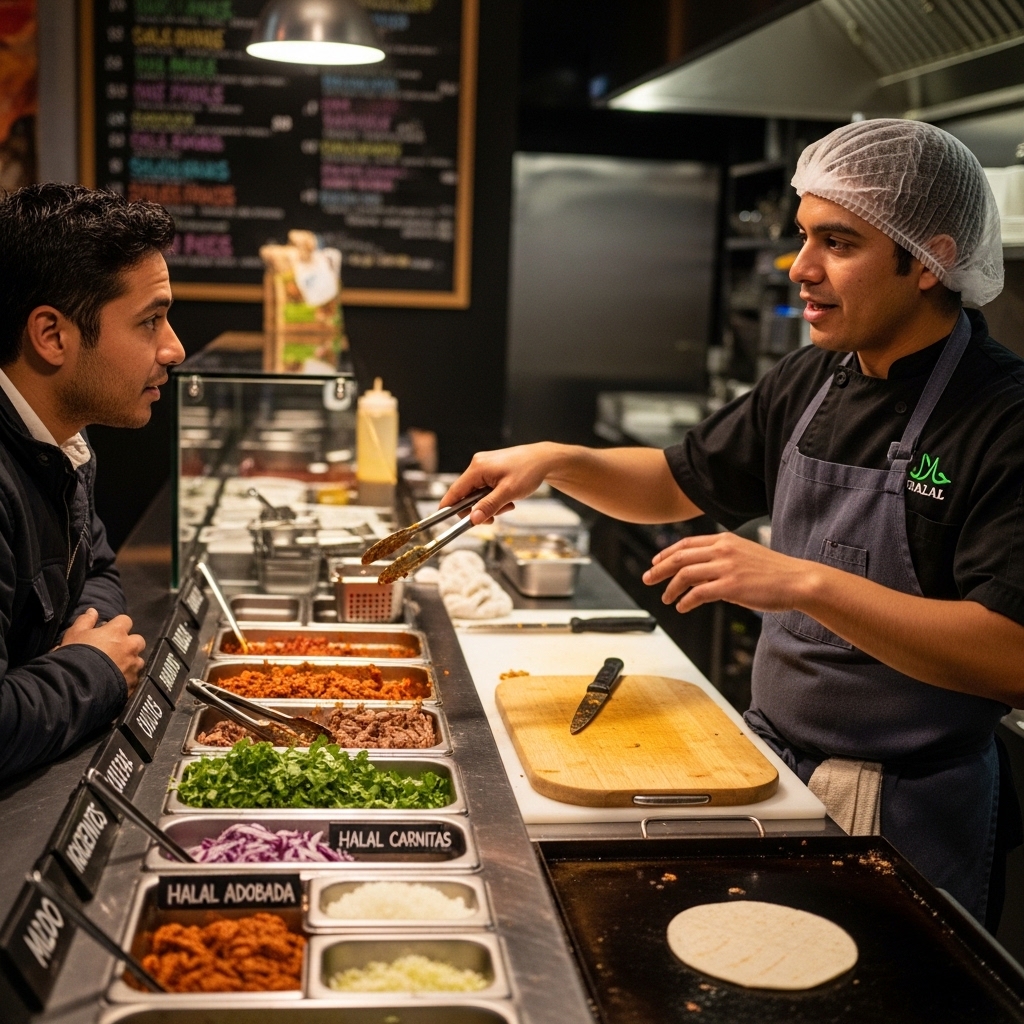
Another misconception is that halal is hard to verify, so diners cannot be sure what they are getting. While it is true that standards can vary, Naperville’s better halal taquerias are remarkably transparent. Staff can explain suppliers and kitchen practices without hesitation. You will see tidy prep areas, clear labeling, and a calm rhythm during busy hours—signals that processes are real, not just slogans. The path to clarity often begins with a simple question: “How do you handle halal in the kitchen?” The best places beam with pride as they answer.
People sometimes assume halal tacos are heavier or greasier than their counterparts. That stereotype likely stems from experiences with over-sauced or poorly balanced fillings. In a well-run halal kitchen, restraint is a virtue. Marinades bring flavor without drowning the meat; salsas add acidity and brightness; and warm tortillas are treated as central, not as a disposable wrapper. The result is food that satisfies without leaving you sluggish, a key reason halal tacos have caught on with Naperville’s active families and professionals.
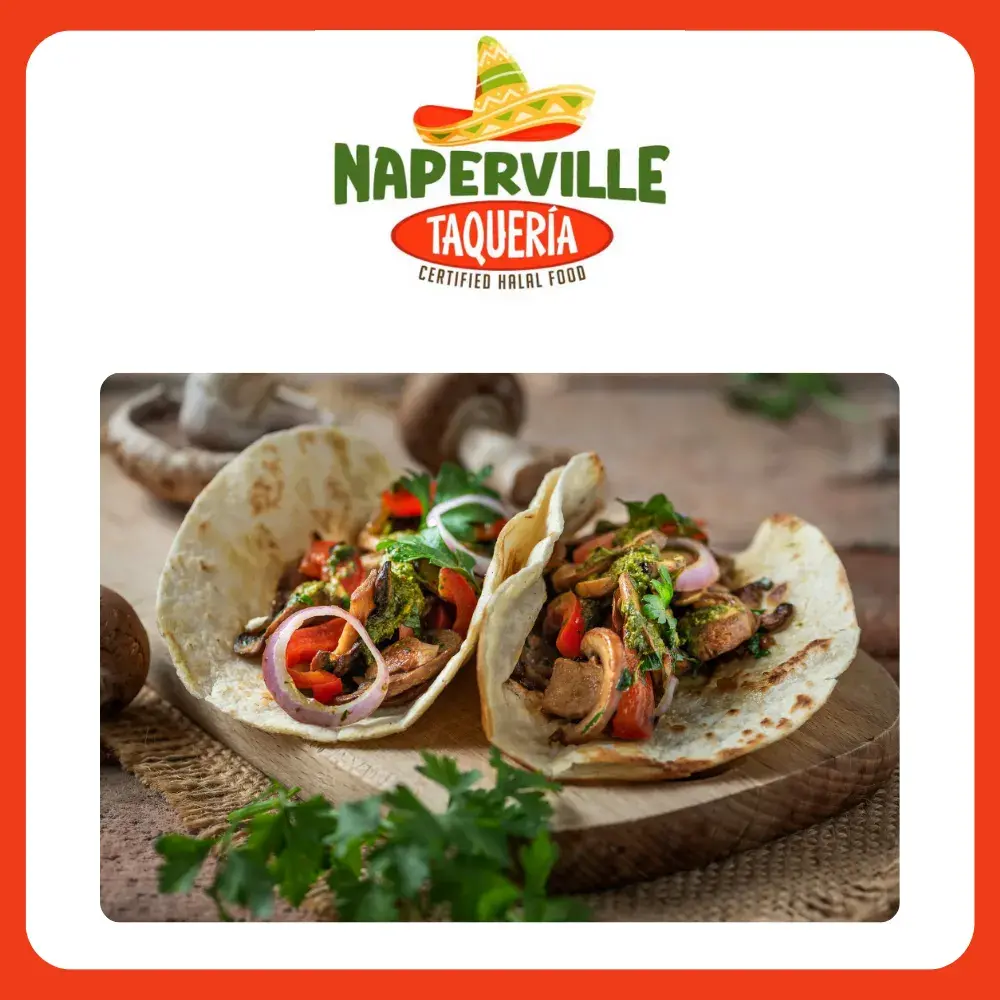
I often hear that vegetarian diners will feel sidelined at halal taquerias. The reality is that many halal-focused kitchens excel at plant-forward options. Charred vegetables, seasoned beans, or mushrooms with a savory glaze often share space on the plancha with the same level of attention. It is common to find vegetarian tacos that feel like complete dishes, not afterthoughts. For mixed groups gathering after a community event or a stroll by the Riverwalk, that inclusivity matters.
Supply chain worries are another source of confusion. Some diners fear that halal claims are marketing rather than practice. In Naperville, where word travels fast and repeat business is fuel, there is a strong incentive to get it right. Reputable spots can point to suppliers and walk you through their prep routines. The key is process: labeled storage, clean separation where necessary, and staff training that makes good habits second nature. When you encounter that discipline, confidence follows naturally.
Another myth says halal tacos will be more complicated to order or enjoy because of extra rules. In reality, the experience at a good halal taqueria is often simpler. Clear signage, staff who answer questions directly, and a straightforward ordering flow help you focus on flavor rather than logistics. The structure that supports halal compliance doubles as a hospitality advantage, especially on busy weekends when the line is out the door.
Some diners assume that halal dilutes Mexican culinary identity. The best Naperville kitchens lay that fear to rest. Their tacos are rooted in Mexican technique—proper tortilla treatment, balanced salsas, and respect for the interplay of acid, heat, and texture. Halal adds a layer of sourcing ethics and kitchen discipline without erasing heritage. In practice, it can sharpen a kitchen’s focus, because boundaries encourage cooks to be precise about every component they include.
There is also the issue of heat levels. I have watched people equate halal with blandness or, conversely, assume that every halal taco must be searingly hot. Both extremes miss the point. Spice is a spectrum managed by salsas, and halal tacos in Naperville provide options—from gentle, lime-forward verdes to smoky reds with a satisfying burn. The control is in the diner’s hands, which is exactly where it should be.
Misconceptions aside, there are real issues worth discussing, and smart Naperville kitchens address them head-on. Cross-contact is one. While halal is not an allergy protocol, careful separation of tools and storage is part of doing things properly. When a kitchen commits to those systems, everyone benefits, including guests with other dietary needs. Another issue is communication; if staff are not well-versed in explaining halal, confusion can linger. The best operations invest in training so that every team member can answer confidently.
Consistency during rushes can also be challenging. Downtown lines swell quickly, especially in warm weather when the Riverwalk draws crowds. The mark of a reliable halal taqueria is a steady hand under pressure—tortillas warmed rather than scorched, proteins held at the right temperature, and salsas refreshed often. That steadiness keeps flavors intact and signals respect for the diner from first ticket to last.
The final issue worth mentioning is expectations shaped by early experiences. If someone’s first halal taco came from a rushed operation or a pop-up without systems, they may carry that impression for years. Naperville’s scene has matured significantly. Brick-and-mortar spots have refined their methods, built supplier relationships, and learned to communicate what they do. It is worth revisiting halal tacos with fresh eyes and an open palate, because the difference is especially clear now.
Midway through a meal, I like to pause and taste the salsas on their own. A spoonful of verde, a dab of roja, and a squeeze of lime tell you a lot about the kitchen’s priorities. Are the flavors bright? Do they balance salt and acidity with restraint? When those answers are yes, chances are the rest of the operation is equally attentive. If you want to pre-plan your tasting, a look at the current menu can help you decide which combinations to try.
Education goes both ways. Diners can ask thoughtful questions and share feedback; kitchens can post clear information and welcome conversation. Naperville thrives on that exchange—schools, civic groups, and small businesses all benefit when we choose dialogue over assumptions. Halal tacos are a flavorful arena for that practice, one where a warm tortilla becomes the prelude to a better understanding of one another.
For families and friends eager to bridge differences at the table, halal tacos provide a practical, delicious path. You do not need a grand plan, just an appetite and a willingness to try. Start with classics, learn the spice range, and build from there. As you do, the myths fade and the food speaks for itself—bright, balanced, and rooted in care.
Frequently Asked Questions
What does halal actually mean for tacos?
It means meat sourced and prepared according to Islamic dietary guidelines, supported by kitchen practices that prevent cross-contact with non-halal items. It governs process and sourcing rather than limiting spice or culinary creativity.
Are halal tacos only for those who observe halal?
No. Many Naperville diners choose halal tacos because they value freshness, balance, and transparency. Observant guests gain assurance, and everyone else benefits from the same careful standards.
How can I tell if a taqueria truly follows halal standards?
Ask about suppliers and preparation methods. Look for organized prep areas, clear labeling, and staff who can answer confidently. Reputable spots will gladly explain their approach.
Do vegetarian options exist at halal taco places?
Yes. Plant-forward fillings are common and often excellent, with attention to texture and seasoning that makes them feel complete rather than secondary.
Will halal tacos be bland or extremely spicy?
Neither by default. Spice is managed primarily through salsas. You can choose mild or hot to suit your palate without changing the core dish.
Why did my first halal taco disappoint, and should I try again?
Early experiences can reflect growing pains in operations. Naperville’s halal taco scene has matured, with better systems and communication. Giving it another try at a well-run spot can change your perspective.
If you are ready to test assumptions with your own taste buds, now is the time. Check the latest menu, invite a friend who is curious, and let a warm tortilla and bright salsa make the case. Naperville has moved past the myths; all that remains is for you to take a bite and see.