Walk any block near the Riverwalk on a summer evening and you’ll hear the quiet percussion of a town settling into dinner: a grill lid clinking shut, a screen door squeaking open, the laughter that follows when plates hit the table. In Naperville, tacos have become one of the clearest expressions of our food culture not because they are trendy, but because they feel like home. They bridge neighborhoods and generations, letting newcomers and long-time locals sit down to the same kind of meal and tell different stories with the same ingredients. If you want a snapshot of how that story looks in professional hands, glide your eyes across a neighborhood taqueria’s menu and you’ll recognize the same spirit translated into combinations that invite everyone to the table.
A Common Language for a Diverse Town
Naperville has grown by welcoming families from around the world, and our kitchens reflect that. Tacos thrive here because they respect both tradition and improvisation. A corn tortilla loaded with carne asada honors a lineage of culinary craft; a roasted cauliflower taco with ancho-lime yogurt nods to modern sensibilities without erasing the past. This blend mirrors our civic character, where heritage festivals share calendars with school concerts, and where a potluck might include pierogi, biryani, and salsa without anyone blinking. Tacos become the bridge, a familiar format that adapts to any accent.
Because tacos are assembled more than they are plated, they invite participation. In homes near 95th Street as much as in condominiums off Washington, people lean toward the counter, mixing salsas in small bowls, tasting a squeeze of lime, passing a new hot sauce around for curiosity. That shared assembly line encourages conversation across generations, the kind of easy talk that stitches a community together.
Naperville’s Markets and the Taste of Place
Local food culture starts with ingredients, and our region offers a steady rhythm of seasonal inspiration. Summer tomatoes become salsa that tastes like sunshine. Corn, charred on the grill, finds its way into a smoky relish that brightens an evening meal. When fall settles in, poblanos, squash, and slow-cooked meats bring comfort. Even winter cooperates thanks to hardy cabbage for slaw and citrus to keep flavors sharp. Tacos are one of the best canvases for this seasonal dance because they accommodate change without drama; swapping fillings is not a deviation but the point.
Food culture also flourishes when people feel confident making a dish their own. The taco format teaches that confidence. A new cook learns how heat transforms onions from sharp to sweet, how cilantro wakes up a plate, how the faint char on a tortilla adds aroma. Over time, that practical knowledge spills into other recipes, building a city of home cooks who can get dinner on the table without anxiety. Confidence breeds generosity, and you see it in neighbors who share a jar of salsa or show a friend how to warm tortillas properly.
Gathering, Generosity, and the Social Life of Food
You can measure a food culture by how naturally it creates community. Tacos excel because they are communal by design. At graduation parties in backyards near Neuqua Valley and small family birthdays in apartments near North Central College, tacos turn sitting into lingering. They keep people at the table for one more story, one more pass of the salsa, one more laugh. That lingering matters; it’s where friendships deepen and young children learn that meals are about more than eating.
Even the tactile nature of tacos—holding, folding, taking small bites—slows a meal down just enough for conversation to catch up. The effect is a gentle antidote to the speed of suburban life. In a town where calendars are full and commutes are long, tacos carve out space for connection.
Respect for Craft, From Home Kitchens to Taquerias
Local food culture thrives when craft is visible and respected. You can see it in the way a home cook toasts a tortilla directly on a skillet until it blooms with warmth. You can see it at a taqueria where pork turns slowly on the spit, where a cook’s hands move with practiced economy, where salsa is tasted and seasoned like a musician finding a perfect note. That craft binds us to those who cooked before and those who will cook after. It teaches patience and rewards attention, values that echo well beyond the kitchen.
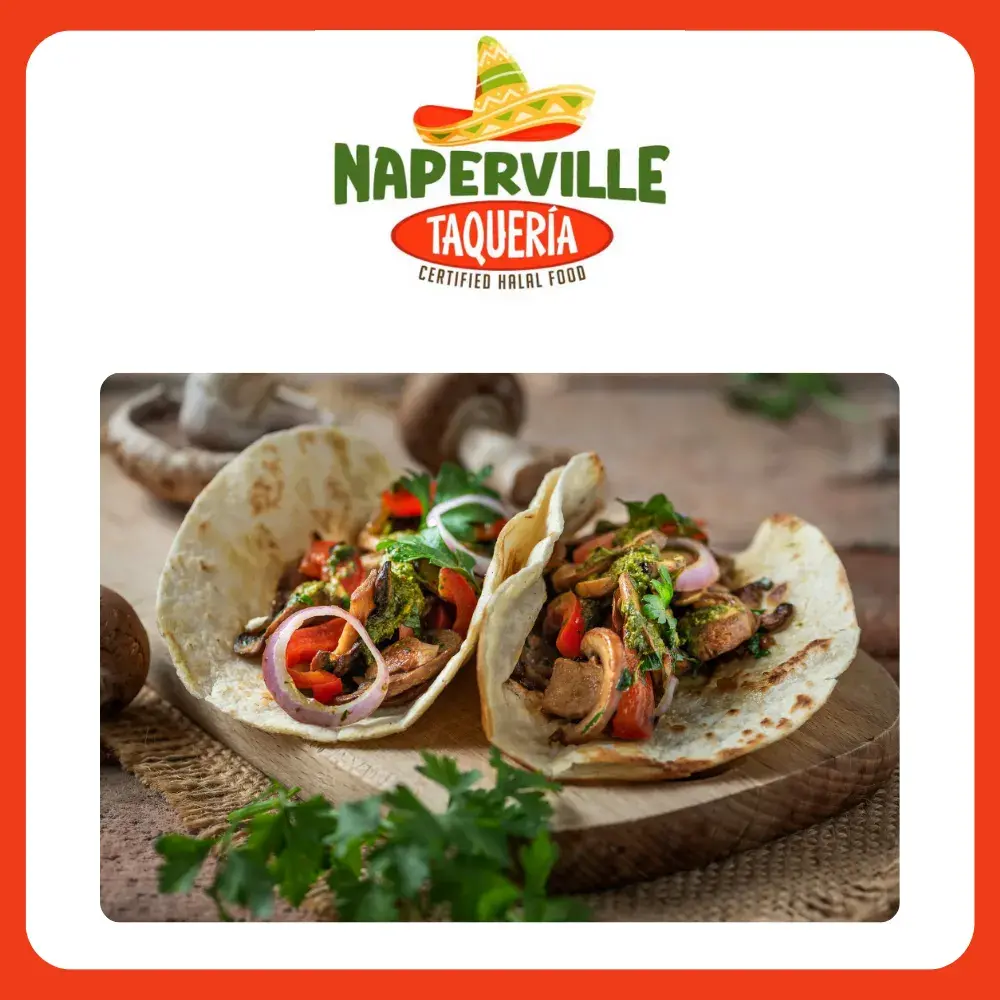
At the same time, Naperville’s taco scene encourages curiosity. A vegetarian might discover a mushroom taco that channels the savor of a grilled steak. A spice-averse diner might try a mild charred-tomatillo salsa and realize heat is only one color in a broader palette. These small discoveries nudge our food culture forward, one bite at a time, without losing the thread of tradition.
Health, Accessibility, and Everyday Pleasure
Food culture grows when everyday meals are both practical and pleasurable. Tacos deliver on both counts. They are economical without feeling austere, and they accommodate most dietary preferences with ease. A family can eat the same meal and personalize it at the last second, avoiding the trap of cooking multiple dinners at once. The result is more home cooking, which research consistently ties to better nutrition. But the joy matters just as much as the data. A taco that crunches, drips a little lime, and snaps with cilantro turns a Tuesday into something you’ll remember on Friday.
For those of us who run between work, school events, and the late-night run to the pet store, tacos are a relief valve. They let us eat well without ceremony, then get back to the rest of life. That reliability—flavor without fuss—earns them a permanent place in our local repertoire.
Stories on a Plate: Identity and Belonging
Tacos matter to Naperville because they carry stories. For some, they are an echo of home and childhood. For others, they are a new discovery, a way to taste a neighbor’s tradition without leaving town. Over time, those stories intermingle. A family might fold Korean barbecue into tortillas one night, then return to carne asada the next. Someone learns to pickle onions because a coworker brought a jar to a potluck. This cross-pollination turns our food scene into a living archive—flexible, generous, constantly refreshed by the people who make this city their own.
When a dish becomes both personal and public, it becomes cultural infrastructure. You find it at school fundraisers, community events, and backyard dinners. You hear it in the shorthand friends use when making plans—“Let’s do tacos”—because everyone knows what that means: warmth, variety, and an easy welcome.
The Middle of the Table: Where Naperville Meets
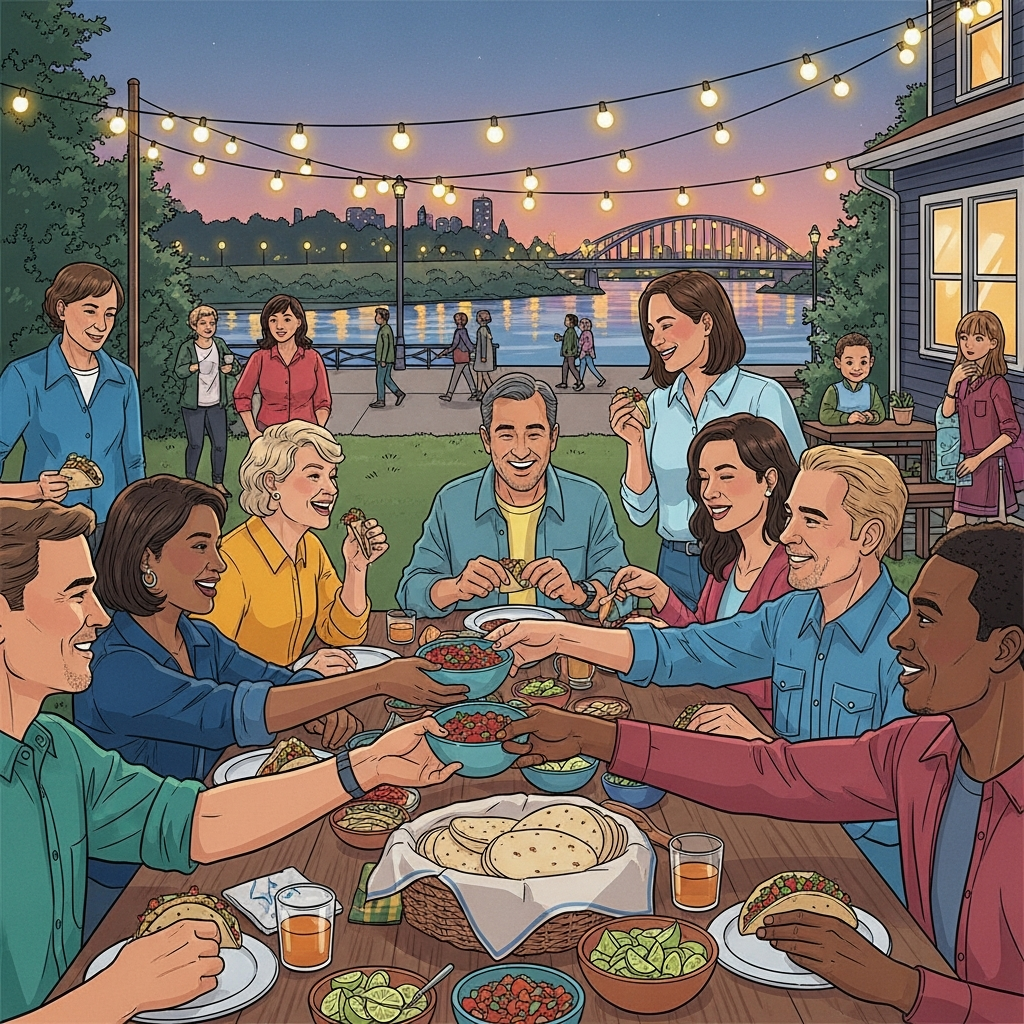
If you scan the spread at a neighborhood gathering, you can tell what a town values. In Naperville, the middle of the table often features salsas, lime wedges, and warm tortillas wrapped in a towel. People lean in, offering a favorite topping or swapping a story about a new place to try. That physical center—the shared space where hands move and conversation flows—tells you our culture prizes participation and respect. Everyone adds something; everyone takes part.
Professional kitchens amplify those values. You can see it on a well-composed plate, where the cook has balanced acidity, heat, texture, and richness. Skimming a thoughtful menu shows that same balance at scale, a promise that whether you are adventurous or cautious, there is a path to delight. That reliability is not accidental; it is the product of repetition, tasting, and care, the same qualities home cooks aspire to on a smaller canvas.
Seasonality and Innovation Without Gimmicks
Trends pass through every food scene, but in Naperville the most enduring innovations feel grounded. Tacos offer a low-pressure place to try new ideas because the format is familiar. A winter special might feature slow-braised meats with warm spices, while summer leans into bright slaws and grilled vegetables. The structure holds; the fillings evolve. This keeps the community curious without making anyone feel left behind. You can try something new and, if it isn’t your favorite, pivot to a classic at the next meal.
Innovation also shows up in technique. A home cook might learn to char tomatillos under the broiler or to bloom spices in a bit of oil to deepen flavor. Each skill becomes part of the cultural toolkit, shared informally among friends and neighbors until it feels like common knowledge.
Teaching the Next Generation
Our food culture is only as strong as what we pass down. Tacos are a teacher. Kids can help assemble components, practice safe knife skills with soft items like avocado, and learn the difference between raw and cooked flavors by tasting salsa before and after it rests. They also witness the small rituals—warming tortillas, salting thoughtfully, squeezing lime at the end—that elevate a simple meal. These lessons are light to carry and produce outsized returns; in a few years, they reappear when a teenager assembles a respectful, delicious plate for a friend.
Just as importantly, tacos offer a gentle introduction to hospitality. A child who learns to offer a plate, pass the salsa, and ask a guest about heat preferences is learning the etiquette that makes gatherings pleasant. That social training, tucked into dinner, strengthens the fabric of our town.
Memory, Place, and the Taste of Home
The most enduring reason tacos matter to Naperville is memory. We remember the first backyard summer when we finally nailed our favorite salsa. We remember a winter night when a warm tortilla made the kitchen feel like a refuge. We remember who was there when we laughed over a too-spicy bite or cheered a perfectly charred pepper. These memories make us loyal to the format, and loyalty creates continuity. When you can count on a dish to feel like home, you bring it out for milestones and weeknights alike, and it becomes part of how a city tastes to its people.
That continuity sustains our restaurants and informs our home kitchens. It explains why a line still forms at lunchtime on a drizzly Tuesday, and why neighbors trade tips on salsa techniques in the aisles of the grocery store. The taco is the thread; we are the quilt.
FAQs
Below are answers to the questions I hear most from neighbors who are curious about how tacos have woven themselves into Naperville’s food identity.
Are tacos a trend, or are they here to stay?
They’re here to stay. Tacos thrive because they balance tradition with flexibility, allowing cooks to honor heritage while experimenting with seasonal ingredients and modern techniques. That combination gives them lasting power.
What makes tacos such a good fit for community events?
They scale easily, accommodate dietary preferences, and keep people at the table. The format invites conversation and participation, which is exactly what community gatherings need to feel warm and inclusive.
How do restaurants influence home taco nights?
Restaurants showcase technique and flavor combinations that home cooks adapt with what they have. A well-made plate offers a template—balance of acidity, texture, heat, and richness—that translates to the home kitchen.
What role does seasonality play?
Seasonality keeps tacos fresh and connected to place. Summer brings bright produce and quick grilling; winter encourages slow braises and pickled accents. The structure stays constant while ingredients reflect the calendar.
Is Naperville’s taco culture only about Mexican food?
Mexican culinary traditions anchor the format, but Naperville’s diversity means you’ll find cross-cultural riffs that show respect rather than novelty for novelty’s sake. The common denominator is care and deliciousness.
How can a newcomer plug into this food culture?
Start by cooking a simple taco meal at home, share it with neighbors, and ask for their favorite salsa tips. When you’re looking for inspiration, browsing a local menu can spark ideas you’ll bring back to your own kitchen.
If reading this has you thinking about your next gathering, consider making tacos the centerpiece. Invite a friend to bring a salsa, set out warm tortillas, and let the table do the rest. And if you’d like a head start, explore the full menu, choose a few favorites, and make an evening that feels unmistakably like Naperville—generous, lively, and delicious.