In Naperville, we’re used to days that start early and end late. Between school runs, commutes to the Metra station, and evenings filled with practices, rehearsals, and meetings, dinner sometimes happens in shifts. Burritos fit neatly into that rhythm because they’re easy to enjoy right away and just as easy to save for later. Still, the difference between a leftover burrito that hits the spot and one that turns soggy or tough often comes down to storage and reheating technique. With a few local-tested habits, you can turn last night’s dinner into today’s satisfying lunch or a post-practice booster without sacrificing flavor or texture.
Leftovers are a kind of insurance policy for Naperville households. Maybe you grabbed an extra burrito on Ogden Avenue after a long day, or your teen had half left from a quick dinner before a game at Knoch Park. Knowing how to store and reheat properly keeps your kitchen calm on nights when schedules collide, especially if you’re shuttling between the 95th Street area and downtown with no time to cook. Fortunately, burritos are forgiving—if you treat them right.
Before we dig into methods, one general rule makes everything easier: think like a builder. A burrito is a structure. Moisture, heat, and time act on that structure. The smarter you are about where moisture goes and how heat returns to the tortilla and filling, the better your leftovers will be. A quick glance at the menu the next time you order can even influence how well tomorrow’s meal reheats, because a few add-ons hold up better than others.
Immediate Storage: The First Ten Minutes Matter
Once you realize you won’t finish your burrito, your first move sets the tone. Close the foil snugly so steam doesn’t rush out and dry the tortilla, but don’t trap too much heat if you’re not refrigerating right away. If you’re hopping from a Riverwalk stroll back to the car, let the burrito cool for a few minutes on the passenger seat before sealing it tightly and heading home. That brief cool-down prevents condensation from turning the tortilla soggy.
When you arrive, transfer the burrito to an airtight container or rewrap it in fresh foil. If your refrigerator runs cold, add a paper towel to absorb residual moisture. People are often surprised at how much this small step helps the tortilla stay flexible. Labeling leftovers with initials also avoids morning confusion when kids grab lunch from the fridge before school.
Fridge Or Freezer?
Burritos destined for the next day belong in the fridge, ideally consumed within 24 hours for the best texture. For longer storage—say, you snagged two after a late meeting and want a weekend backup—the freezer works well with minor prep. Wrap the burrito tightly in foil, then slide it into a freezer bag to prevent freezer burn. Beans, rice, and grilled meats generally freeze and reheat nicely. Fresh salsas and lettuce do not, so plan to add those after reheating.
If you often carry a lunch to offices near Washington Street or along 75th Street, freezing a burrito or two can be a lifesaver. Just move one to the fridge at night so it thaws gently by morning, then reheat at work. Thawing builds an even temperature gradient that protects the tortilla from scorching while the interior is still cold.
Reheating Methods Ranked By Texture
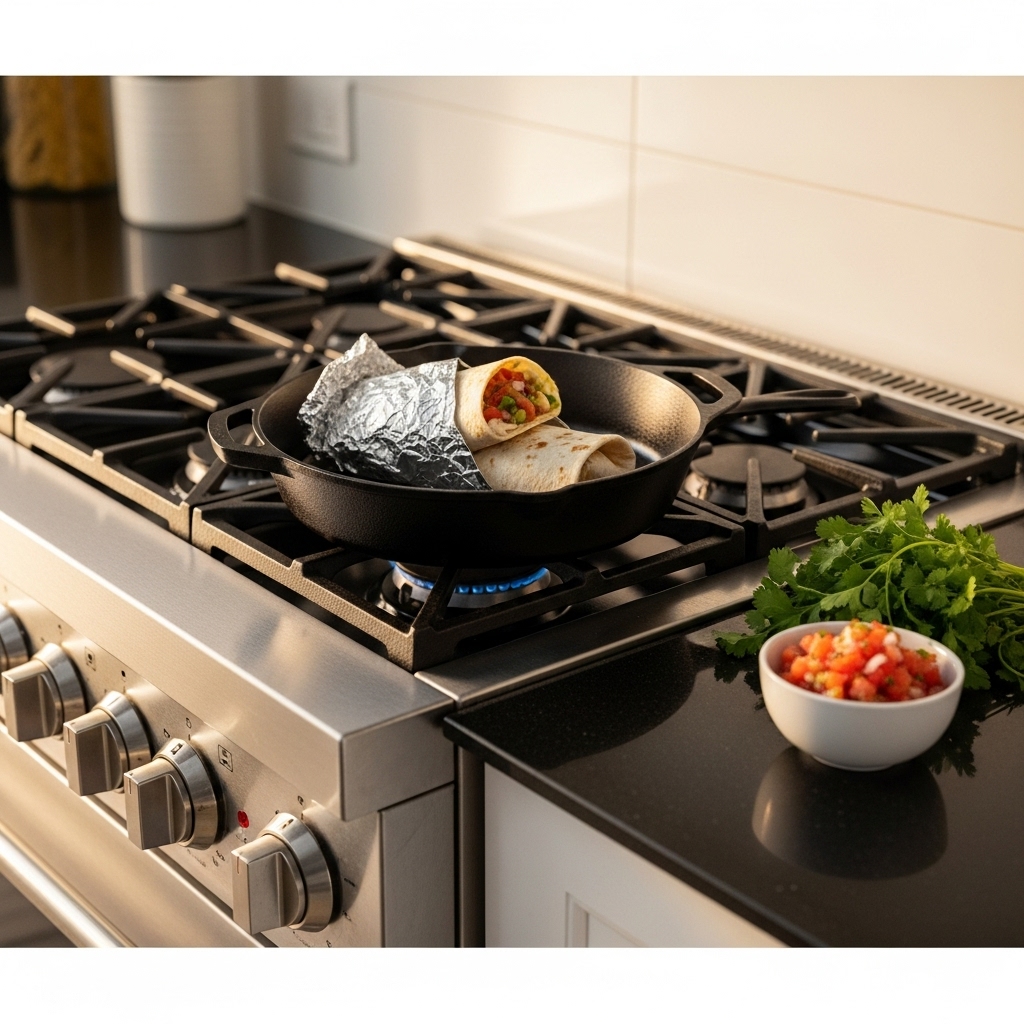
Every household has a preferred method, and each has trade-offs. The stovetop skillet is the local favorite for a reason: it delivers a tender, slightly crisp tortilla and a warm, cohesive filling. Set a nonstick or cast-iron pan over medium heat, place the burrito seam-side down, and cover with a lid for a minute or two to trap gentle steam. Flip and repeat until the exterior feels supple and lightly toasted. This technique is quick, keeps the outside from drying out, and revives the structure that makes handheld eating comfortable on the move.
Toaster ovens and air fryers also shine if you’re careful. Lower temperatures and shorter intervals preserve moisture. Wrap the burrito in foil and warm at a moderate setting, then finish uncovered for a minute to crisp the exterior. This approach is great before a sprint to North Central College or a midday refuel between errands in the Main Street Promenade area. The microwave is the speed champion, but it needs finesse. Wrap the burrito in a slightly damp paper towel and heat in short bursts, turning occasionally. This prevents hot spots and restores flexibility, especially if you finish with a 30-second skillet toast to rebuild the outer texture.
Refreshing Freshness After Reheating
Even the best reheating slightly dulls brightness. The fix is to add freshness afterward. A spoon of pico de gallo, a squeeze of lime, or a handful of crisp romaine brings back the contrast that makes each bite exciting. If you keep a small container of salsa in the fridge, you can turn a leftover into something that tastes newly assembled. Naperville families often keep these “finishers” ready because they double as salad toppers and quick garnishes for other meals, too.
Guacamole deserves special mention. Reheated burritos benefit from a creamy counterpoint, and a small dollop adds richness without relying on melted cheese. If you’re packing lunch for work near Washington Street, tuck a container of guacamole or salsa into your bag and add it just before eating. The first bite will feel bright and complete.
Preventing Soggy Tortillas
Soggy tortillas come from trapped steam and wet fillings near the edges. When storing, keep saucier components centered by tucking both ends before wrapping tightly. If you know you’ll save half, ask for a snug wrap when ordering and consider lighter crema or salsa distribution to maintain structure. At home, letting a reheated burrito rest for a minute before unwrapping allows steam to settle so the first bite doesn’t collapse.
For lunches packed in the morning, place a square of parchment between the burrito and the container to wick moisture. Store vertically if possible so gravity doesn’t pull juices toward one side. These small, fussy-sounding steps matter when you’re counting on a clean, tidy lunch between meetings.
Family Logistics And Leftover Strategy
Every Naperville household eventually develops a leftover strategy. Some save halves in clearly labeled containers for after-practice hunger. Others designate a “burrito night” where extras from the week get reheated and topped with fresh salsa for a no-stress dinner before a Riverwalk stroll. Teens learn to reheat on the skillet because it yields the best texture and makes a quick study break snack after a late rehearsal.
If your family juggles multiple activities, consider ordering with leftovers in mind. A bean-forward burrito with fajita vegetables holds up beautifully, while lettuce-heavy combinations are best enjoyed immediately. Check the burrito menu for builds that align with your plan—something hearty for the freezer, something bright for next-day lunch, and a few extras of salsa to refresh later.
Safety And Common Sense
Food safety is part of the equation. Refrigerate leftovers within two hours, sooner in warm weather after a long afternoon at a game. Reheat until hot throughout—steam should escape when you cut into the center. When in doubt, rely on smell, texture, and temperature; better to rebuild a new meal than roll the dice on questionable leftovers. Most importantly, align your method with your day. If you have five minutes before a Zoom meeting, the microwave-then-skillet combo is efficient. If you have a little more time, the stovetop or toaster oven will reward your patience.
Make The Most Of The Moment
Part of the pleasure of reheating is the tiny ritual: foil crackling as you open it, the first waft of warm spices, the soft press of tortilla under your fingers. Plate it or hold it in the wrap—either way, give yourself that first quiet bite. Naperville life moves fast, and leftovers are a way of slowing down just enough to enjoy something familiar and satisfying, whether you’re at the kitchen island on a Saturday or at your desk looking out at a sunny afternoon.
FAQs
What’s the best method for reheating a refrigerated burrito?
A stovetop skillet over medium heat is the all-around winner. Warm each side with a lid for gentle steam, then flip until the tortilla is supple and lightly crisp. If you’re in a rush, microwave in a damp paper towel and finish with a quick skillet toast to bring back structure.
How do I reheat a frozen burrito?
Thaw in the fridge overnight for the most even results. Reheat wrapped in foil in a toaster oven or at a moderate oven temperature until warmed through, then finish unwrapped for a minute to refresh the exterior. Microwaving from frozen works in a pinch but benefits from low power and patience to avoid cold centers and dry edges.
How can I keep a reheated burrito from tasting flat?
Add freshness after heating. Spoon on pico, squeeze lime, or add crisp greens. Those bright accents wake up beans, rice, and proteins, turning leftovers into a meal that tastes newly assembled rather than warmed over.
Which burrito fillings reheat best?
Beans, rice, and grilled or braised meats reheat reliably. Lettuce and fresh salsa are better added after warming. If you’re planning for leftovers, choose combinations that emphasize hearty components and keep saucier elements toward the center.
Is it safe to pack a reheated burrito for a long morning of errands?
If you’ll be out for more than two hours, pack it hot in an insulated container or plan to reheat at your destination. When the day runs long and you’re zigzagging between appointments, a little planning keeps lunch both satisfying and safe.
With a few small techniques and a touch of patience, leftover burritos become a Naperville household superpower—ready when homework runs late, when practice overlaps dinner, or when you want a warm, flavorful break in the middle of a busy day. The next time you order, think ahead about tomorrow’s appetite and choose a build that will shine twice. When you need inspiration, browse the menu, plan your picks, and give yourself the comfort of knowing your kitchen has a reliable, delicious backup plan.