Leftover burritos in Naperville are almost a tradition—half for now, half for later, ready to be revived after a late meeting or before an evening walk along the Riverwalk. But not all reheats are created equal. The difference between a limp second round and a glorious encore often comes down to a few thoughtful steps. As a local who has eaten countless wraps on park benches, at office desks, and at kitchen counters while watching the snow swirl outside, I’ve learned how to store and reheat so the second bite sings like the first. It starts the moment you decide to save a portion, and it continues when you open the fridge and plan your next move. A quick look at the menu can also help you anticipate which fillings reheat best, so you order with tomorrow in mind as much as today.
Good reheating is really about preserving contrast. A burrito is a small ecosystem of textures: a tortilla that wants to be supple but not soggy, beans that crave warmth, rice that appreciates gentle heat, proteins that show their character when revived with patience, and salsas that shine brightest when added fresh. If you keep those goals in mind, your path becomes clear. Separate what should be hot from what should be cool, and introduce heat in a way that wakes ingredients rather than overwhelms them.
Storing smart from the first bite
If you know you won’t finish, pause after a few bites and make a plan. Fold the foil back up tightly, and if possible, remove extra-wet components like pico de gallo or salsas to a small container. The less moisture trapped inside, the better your chances of reviving the burrito’s structure later. Labeling the container with the date is a small kindness to your future self when you’re skimming the fridge after a long day.
For bowls, the same principle applies. Scoop out crunchy toppings and anything herb-forward, stash them separately, and keep the core—rice, beans, protein—together. This way, when you reheat, you can restore crispness and brightness with a final flourish rather than hoping it survived the microwave.
Fridge versus freezer
Leftovers you’ll eat within a day or two belong in the refrigerator, wrapped snugly in foil or placed in an airtight container. If life gets busy and you see a longer gap ahead, the freezer becomes your friend. Wrap the burrito tightly in foil, then slip it into a freezer bag to minimize ice crystals. Label it, and aim to enjoy within a few weeks for best texture. When thawing, patience pays: move it to the fridge overnight so the temperature shifts evenly, which helps the tortilla and fillings reheat more gracefully.
With bowls, the freezer is more selective. Rice and beans freeze reasonably well, but leafy toppings and fresh salsas prefer the fridge. Store components separately when possible so you can rebuild the bowl with fresh elements after warming the base.
Skillet revival for wraps
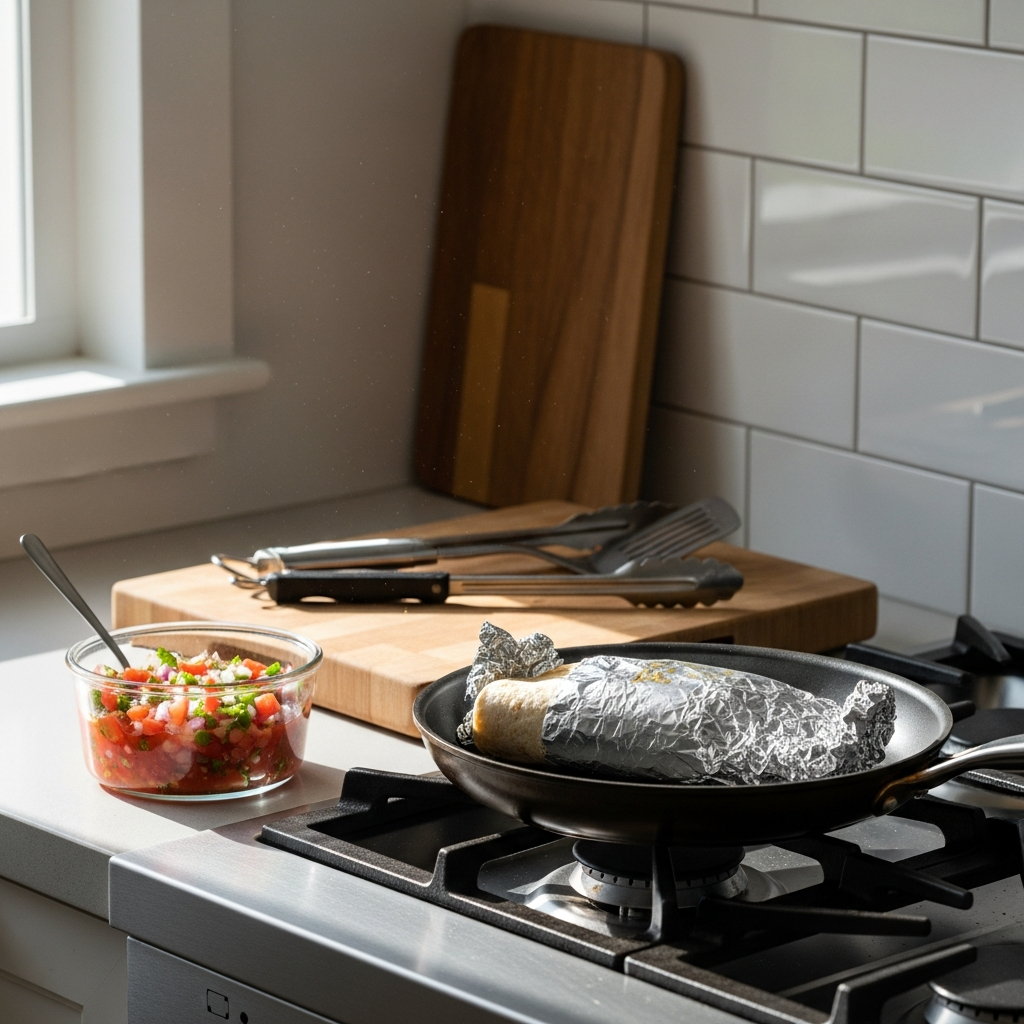
The skillet is my first choice for bringing a burrito back to life. Set a dry, nonstick skillet over medium heat. Unwrap the burrito, brush off any condensation, and place it seam-side down. Let the tortilla warm and firm, then turn it occasionally to heat each side. The goal is gentle, thorough warmth with just a hint of exterior crispness. If the burrito is very thick or cold from the fridge, reduce the heat and give it more time; rushing leads to hot edges and a cold center. A lid placed loosely over the skillet can help heat penetrate without steaming the exterior too much.
When done well, the skillet method returns the confidence to the tortilla—it flexes without tearing—and preserves the harmony of fillings. Add cool toppings or a spoon of salsa at the end, not the beginning, so the contrast pops. The first bite should feel like the chorus returning in your favorite song: familiar, satisfying, and perfectly timed.
Oven and air fryer tips
The oven is great for even reheating, especially if you’re reviving more than one burrito. Preheat to a moderate temperature, wrap the burrito loosely in foil, and warm it until the center is hot. Uncover during the last few minutes if you want a firmer exterior. The process takes a bit longer, but the payoff is consistency from edge to center—handy when the house is busy and you want to set a timer and move on to other tasks.
Air fryers can also deliver a quick, crisp exterior, but they reward restraint. Set a modest temperature and check often so the tortilla doesn’t harden. If you’ve separated salsas and fresh toppings, wait to add them until after the reheat. You’re aiming for a lively, layered bite, not a uniform blast of heat that flattens the experience.
Microwave without the mush
Sometimes the microwave is inevitable: it’s late, you’re tired, and the couch looks like the best seat in the house. You can still get a good result. Wrap the burrito in a slightly damp paper towel to hold moisture close to the tortilla without soaking it. Heat in short bursts, rotating between each interval. Once warm, give it a quick kiss on a hot skillet to restore the tortilla’s poise. Add back cool elements and take that first bite knowing you adapted wisely to the moment.
For bowls, remove fresh toppings, reheat the base in short intervals with a splash of water to keep rice supple, and then rebuild. The sensation of warm and cool meeting in the same forkful is what makes the second serving feel like a fresh meal rather than leftovers.
Food safety matters
Naperville’s fast pace can make it tempting to leave a bag on the counter, but food safety is the quiet foundation of a great reheat. Refrigerate leftovers promptly—ideally within a couple of hours. When reheating, aim for thoroughly hot, not just warm to the touch. Trust your senses: a burrito that smells off or has a texture that doesn’t bounce back likely waited too long. When in doubt, err on the side of caution; there’s always tomorrow’s burrito.
Planning today with tomorrow in mind
One of the smartest habits is to choose builds that suit your reheating plans. If you know lunch will spill into dinner, lean toward fillings that age gracefully: beans, rice, grilled vegetables, and slow-cooked meats. Keep salsas and fresh herbs on the side and add them when it’s time for round two. If you anticipate walking the Riverwalk before heading home, opt for a slightly firmer wrap that will hold up in the bag and then relax beautifully on the skillet later.
Ordering ahead also helps. Decide what you want by checking the menu before the lunch rush, time your pickup so the food is fresh, and plan storage if you’re grabbing extras for the evening. Small steps like these add up to a pattern of leftovers that taste intentional rather than accidental.
Reviving flavor with finishing touches
Reheated food loves a flourish. A squeeze of lime brings burritos and bowls back into focus, waking up beans and cutting through richness. Fresh cilantro adds a green lift. Even a quick stir of salsa with a fresh tomato can brighten a bowl. The goal isn’t to overwrite the original, but to restore the contrasts that make every bite compelling.
If the burrito feels a touch heavy after reheating, pair bites with crisp, cool elements you saved aside. If it lands shy of the first-round spark, a spoonful of vibrant salsa can tip it back into balance. You’re not doctoring mistakes so much as finishing what the reheat started.
Making it a Naperville ritual
There’s a particular pleasure in turning leftovers into a small event. Warm the skillet, set out the cool add-ins, and make a moment of it while the downtown lights glow or the afternoon sun leans across your kitchen. The same foil that kept your lunch tidy earlier now opens like a present. Bite by bite, you’re reminded why this city gravitates to burritos in the first place: they’re generous, adaptable, and good company for the everyday.
Frequently asked questions
How long can I safely keep a burrito in the fridge?
Generally, one to two days is a good window for best quality. Wrap it tightly, keep wetter components separate when possible, and reheat thoroughly before eating.
What’s the best way to reheat without drying out the tortilla?
Use a dry skillet over medium heat and rotate the burrito often. If you used the microwave first for speed, finish on the skillet for a minute to restore suppleness and a gentle exterior crisp.
Can I freeze a burrito with salsa inside?
You can, but the texture improves if you remove fresh salsas and add them after reheating. Freezing concentrates moisture; keeping salsas separate protects crunch and brightness.
Is a bowl easier to reheat than a wrap?
Often, yes. You can reheat the base gently and add back fresh elements at the end. Both formats can be excellent if you separate components and reheat with care.
What if my burrito split during storage?
Rewrap it snugly in foil and warm it in the oven or on a skillet. The heat will help the tortilla become pliable again, making it easier to handle. Add cool toppings after reheating.
If you’re eager to put these tips to work, plan your next lunch with a nod to tomorrow. Check the menu, order a build that reheats beautifully, and enjoy knowing your second serving will be just as welcome as the first—whether you’re headed back to the office, strolling the Riverwalk, or settling in at home.